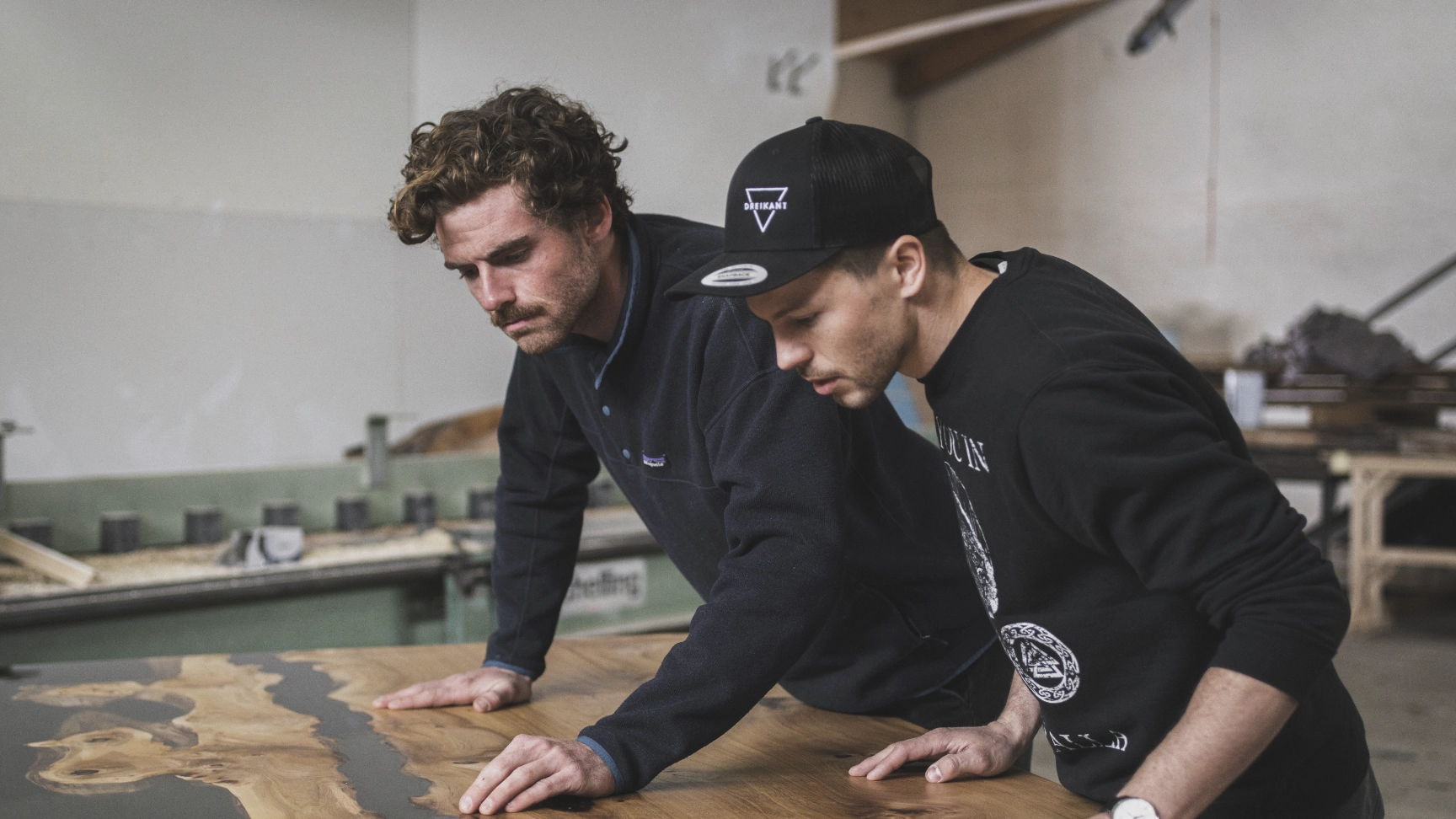
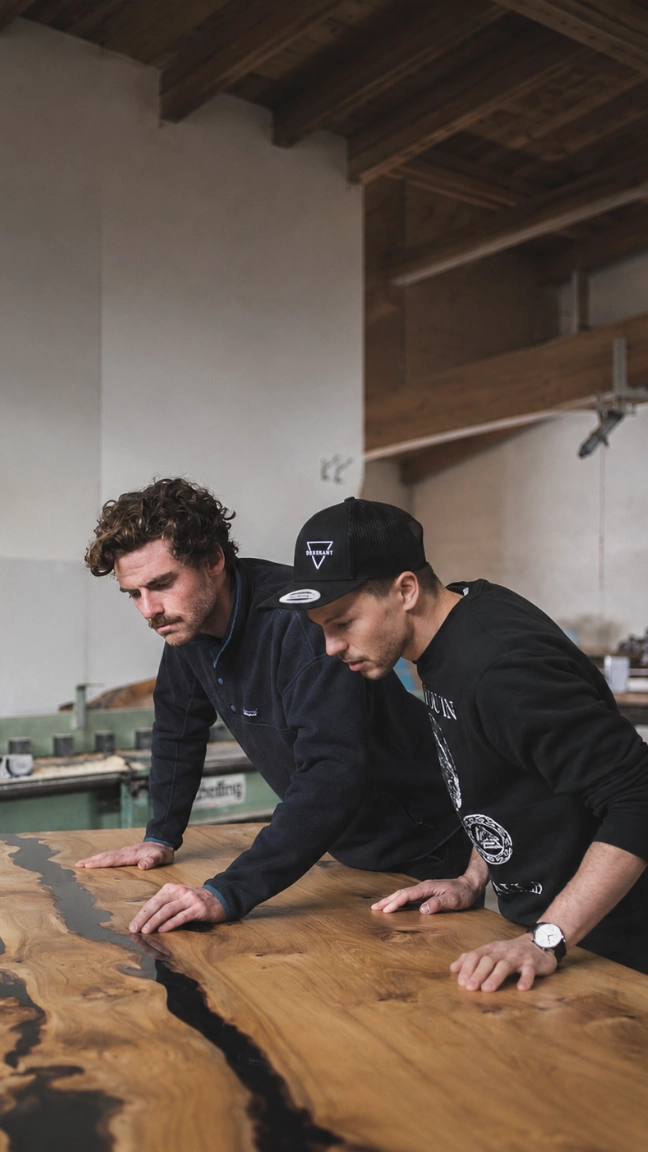
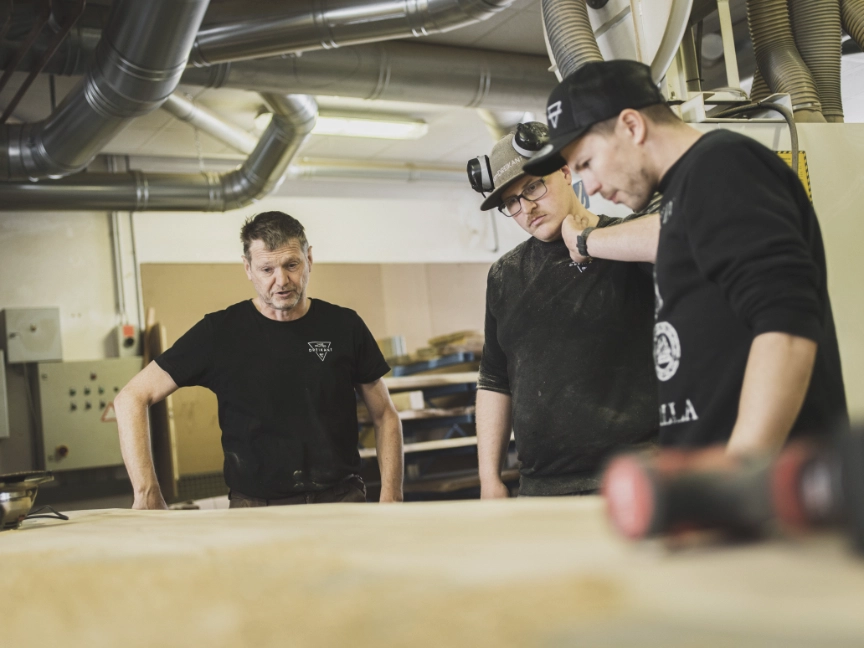
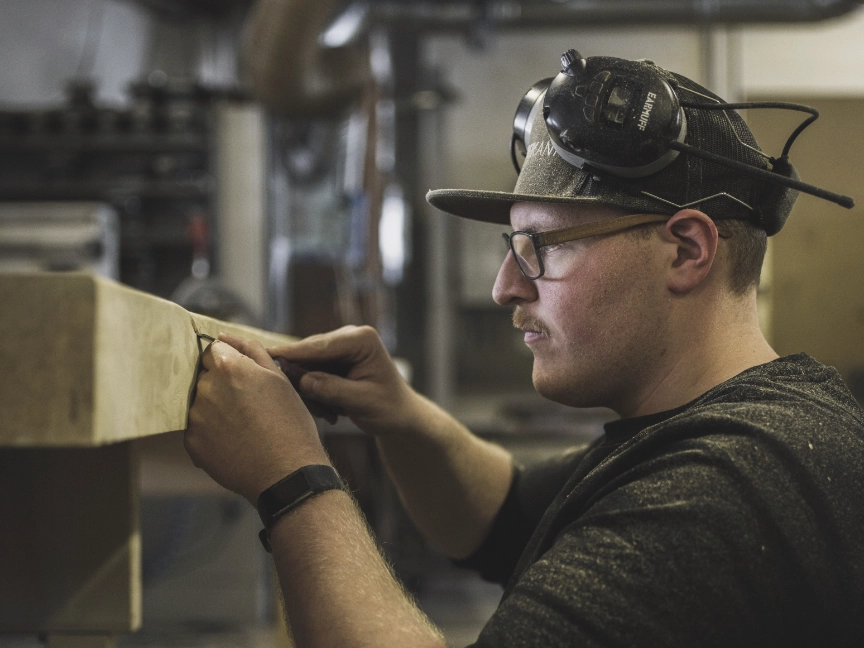
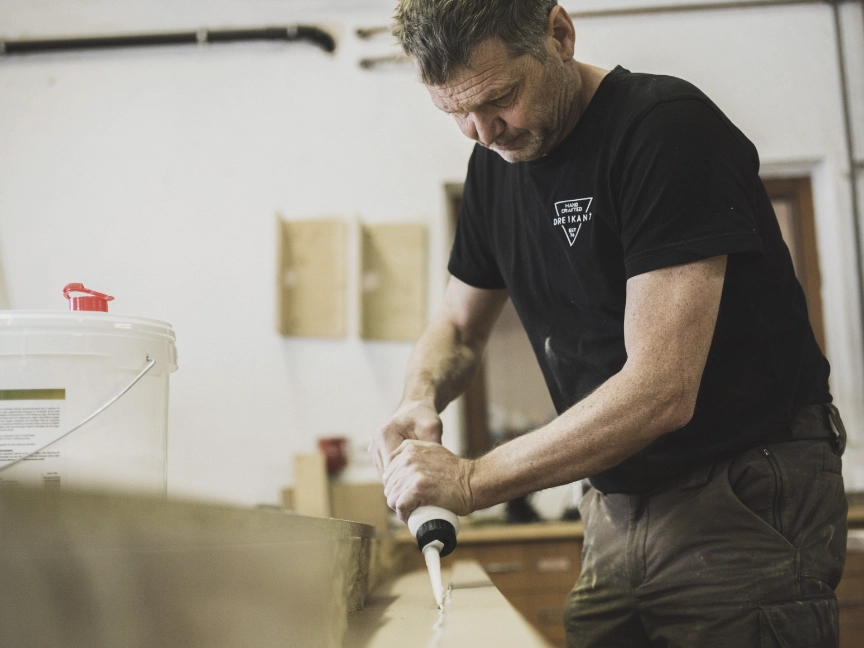
The first step in a table project is to collect the raw slab for the one-of-a-kind table from the showroom and bring it to the carpentry shop. There, we make the necessary preparations for production, such as checking the slab’s moisture content to ensure it’s in ideal condition for further processing. Then comes the exciting moment of cutting. With skilled hands and state-of-the-art tools, we cut the raw slab to the desired size with millimetre precision. We take care to ensure that every edge and every angle is set precisely. This meticulous work guarantees that our dining table will not only be visually appealing but also sturdy and durable. Quality and precision are our top priorities in crafting a high-quality dining table.
Milling
In the next step of the table project, we focus on milling the raw slab to ensure that it is perfectly straight and flat. To do this, we use high-precision milling tools that allow us to eliminate any unevenness or irregularities on the surface. This step not only gives the slab an aesthetically pleasing appearance but also ensures a uniform contact surface for future structural elements such as table legs or tabletop extensions. We perform the milling with great care and expertise to achieve a flawless result that underscores the quality and precision of our one-of-a-kind table.
Edge Finishing
In the next step, we focus on finishing the outer edge of the slab, offering several options. One option is to highlight the natural live edge of the wood, in which we preserve the wood’s irregular shape to achieve a rustic and organic look. Another option is to create a straight outer edge, where we precisely cut the edges of the slab to form a clean, straight line that conveys a modern and timeless impression. Alternatively, you can opt for a Swiss edge, where the edge is slightly bevelled to achieve an elegant and sophisticated effect. Regardless of the option chosen, we place great emphasis on precision and attention to detail to ensure that the table’s outer edge reflects the desired style and character.
Preparing for Epoxy Resin Casting
Next, we prepare the raw slab for pouring the epoxy resin by building a formwork. The formwork serves as a frame or mold to contain the liquid epoxy resin during the pouring process and give it a specific shape. We measure and mark the desired dimensions and shapes for the table to ensure that the formwork fits it perfectly. We then assemble the formwork precisely and securely to ensure that it does not give way or develop leaks during the pouring process. The careful work involved in creating the formwork lays the foundation for the next exciting step, in which we’ll pour the epoxy resin into the slab and achieve the impressive fusion of wood and resin.
Pouring the Epoxy Resin
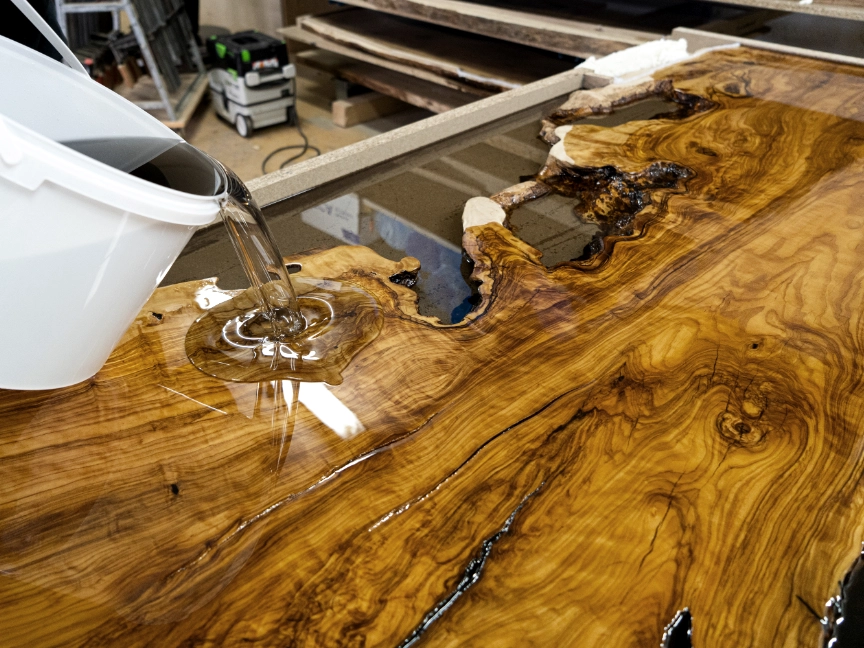
After we’ve prepared the formwork for our raw slab, it’s time for the exciting step of pouring. Depending on the desired style and the atmosphere we want to create with this one-of-a-kind table, we can incorporate various shades and effects into the epoxy resin. For example, we can use layers or pigments to create unique effects such as ocean waves or metallic finishes. During the pouring process, precision is crucial to ensure that the resin flows evenly into the formwork without any air bubbles. By casting the raw slab, we give the one-of-a-kind table a personal touch and create a captivating work of art. This step is a pivotal moment where creativity and craftsmanship come together to create a unique piece that will catch everyone’s eye.
Milling
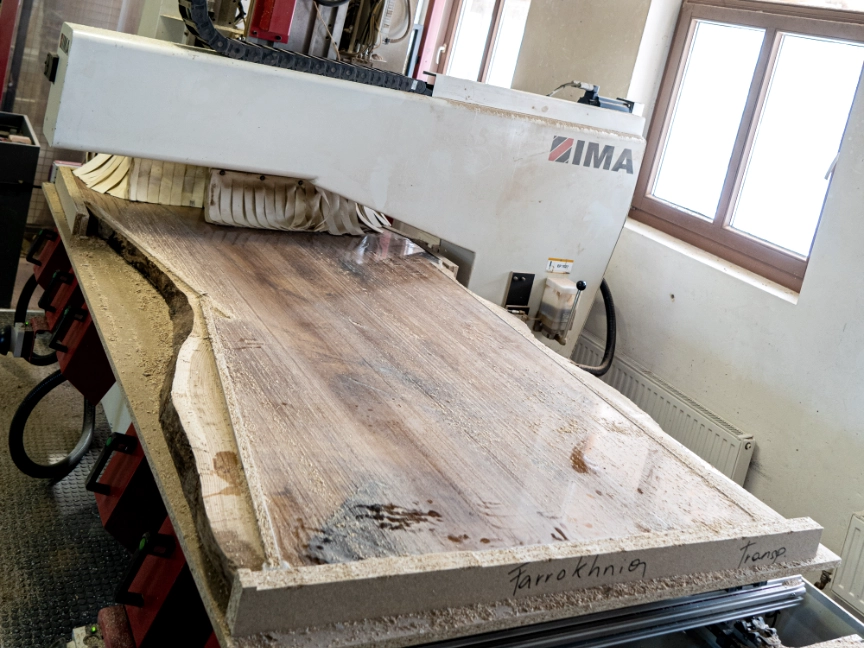
In the next step of our table project, we use a CNC router to precisely mill the wooden slab and create a beautiful transition between the wood and the epoxy resin. Using the milling process, we carefully remove the top layer of epoxy resin until we reach the wood surface again. This creates a harmonious transition where the wood and resin blend seamlessly together. Precise milling not only achieves an aesthetically pleasing transition but also ensures that the wood surface is even and smooth. With this precise technique, we achieve outstanding quality and enable the wood and the epoxy resin to blend together in perfect harmony, creating a captivating and aesthetically pleasing overall appearance.
Sanding or Brushing
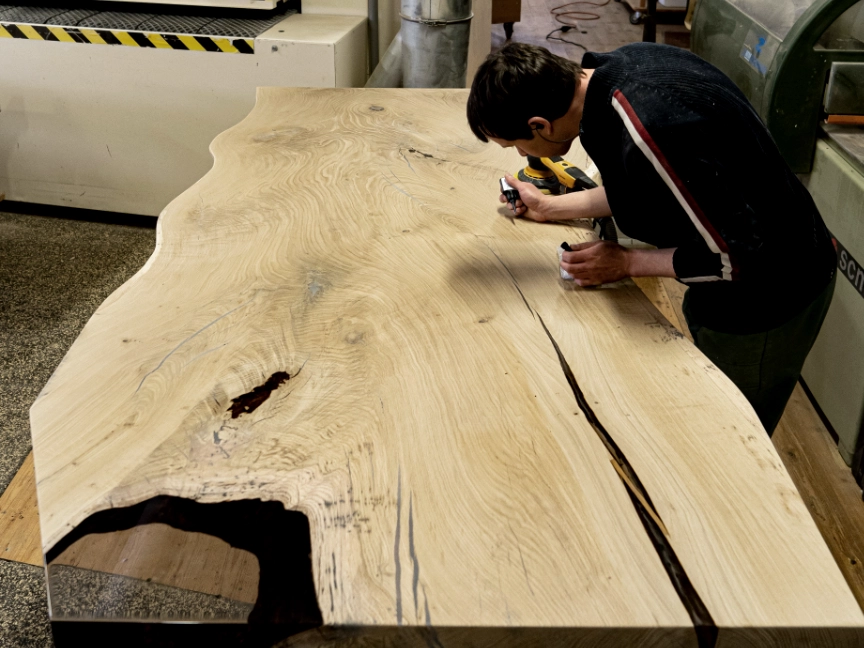
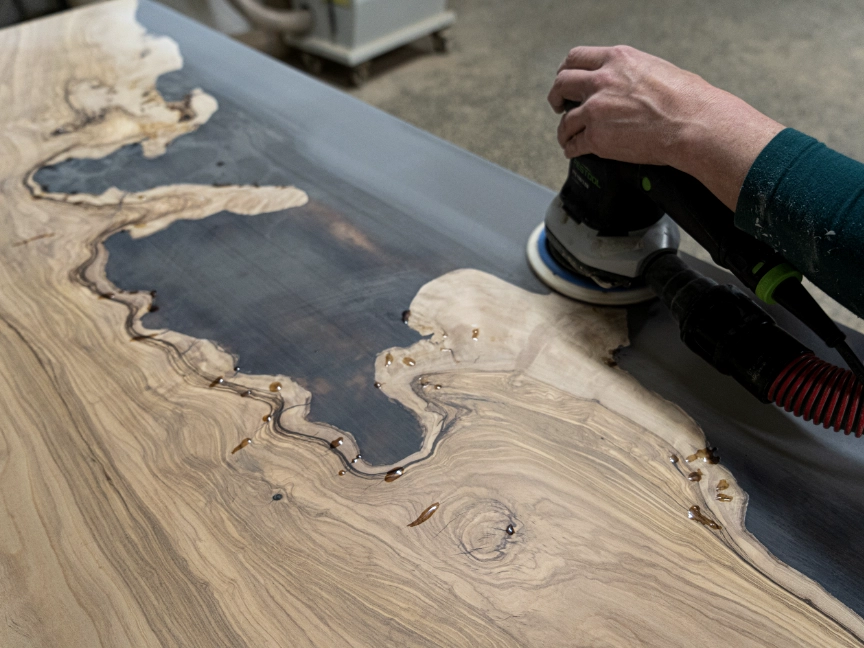
In the next step of the table project, we’ll focus on sanding or brushing the surface of the wood to achieve a smooth and pleasant finish that feels good to the touch. By using sandpaper of different grits, we’ll achieve a smooth, even surface that’s pleasant to the touch. With some types of wood, brushing can also create a unique texture. Special brushes with hard or soft bristles are used to gently work the wood, giving the table a natural and rustic look. During the sanding and brushing process, it is important to treat the surface evenly and gently to achieve a consistent result. Careful craftsmanship and attention to every detail ensure that the wood surface has the desired smoothness and texture.
Polishing
Next, we focus on polishing the epoxy resin; there are various methods depending on the desired result—whether a satin or polished finish is the goal. For a satin finish, we use fine sandpaper and polishing compounds to evenly smooth the surface of the epoxy resin and create a matte, silky finish. If, on the other hand, you prefer a high-gloss, polished finish, we use finer sandpaper and special polishing compounds. Through multiple polishing steps and the use of fine polishing discs or pads, we achieve a glossy and reflective surface. Both finishes have their own charm and can enhance the overall aesthetic of this one-of-a-kind table in different ways.
Painting
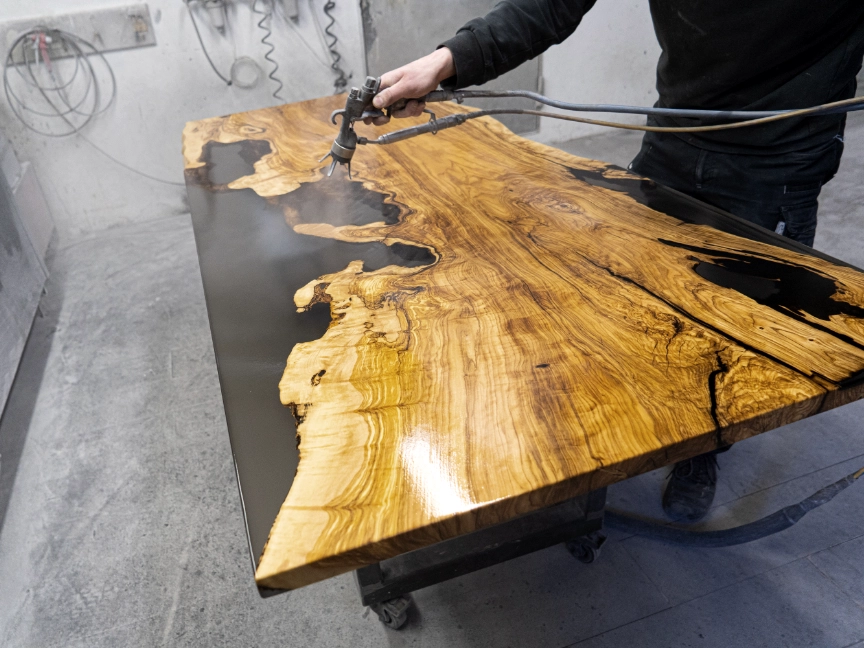
After the final finishing touches, the tabletop is coated with a high-quality matte varnish. The varnish reliably protects the solid wood from moisture, stains, and everyday wear and tear, ensuring a durable and resilient surface. The matte finish allows the wood’s natural structure and grain to remain visible, while also making the surface particularly easy to maintain. Compared to oiled surfaces, the varnish offers greater protection against stains, liquids, and wear and tear from daily use.
Assembly, Acceptance Testing, and Quality Control
As soon as the metal frame is delivered from the metal workshop, we begin assembling the table. With great care and precision, we attach the metal frame to the prepared wooden top to ensure a stable and secure structure. Once assembly is complete, we conduct a thorough inspection and quality control check. We examine every aspect of the table, from the stability and alignment of the metal frame to the perfect fit between the wooden tabletop and the frame. We inspect the wood’s surface for any imperfections, ensure that the epoxy resin is properly polished, and assess the table’s overall appearance to ensure it makes the desired visual impression. This meticulous inspection and quality control ensures that the table is delivered to our customers in top condition. We place great importance on ensuring that every table that leaves our workshop meets our high standards for stability, aesthetics, and quality.
Diese Website verwendet Cookies
Wir verwenden Cookies, um Inhalte zu personalisieren, Funktionen für soziale Medien anzubieten und die Zugriffe auf unsere Website zu analysieren. Außerdem geben wir Informationen zu Ihrer Nutzung unserer Website an unsere Analysepartner weiter. Sie können Ihre Einstellungen jederzeit ändern. Näheres finden Sie in unserer Datenschutzerklärung und in unserer Cookie-Richtlinie.